

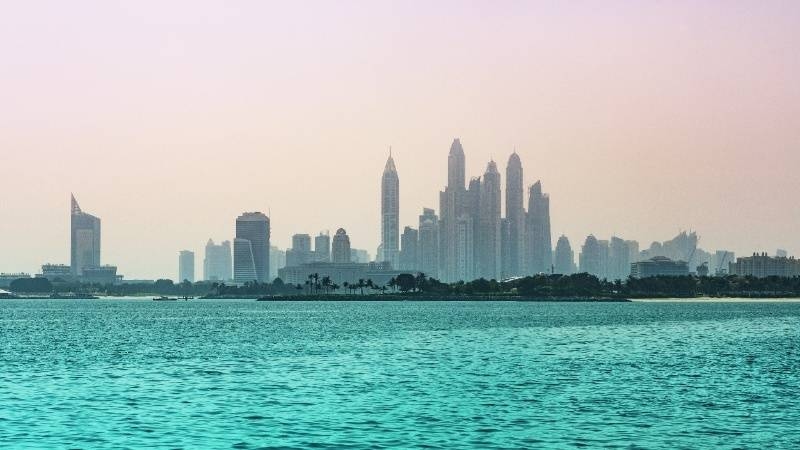
Cities do not just grow upward anymore. They spread, densify, spill into nearby districts, and pull in people, jobs, housing demand, and infrastructure stress all at once. That is what makes 2026 such an interesting moment. Urban growth is still a huge global story, but it is no longer only about the usual superstar megacities everyone already knows.
Some of the most important places to watch now are not always the richest or the flashiest. They are the ones adding people fast, reshaping regional economies, and testing how well cities can keep up with roads, housing, water, transit, and jobs. That is where things get real.
When people talk about the fastest growing cities in the world, they often imagine giant capitals instantly swallowing everything around them. That still happens in some places, sure, but the latest UN urbanization data shows a more complicated picture. In 2025, the world had more than 12,000 cities with at least 50,000 residents, and 96 percent of them had fewer than 1 million people. Many of the fastest-growing settlements are actually smaller cities, especially in sub-Saharan Africa and Central and Southern Asia.
That matters because the growth conversation in 2026 is not only about size. It is about pace, pressure, and momentum. The UN’s 2025 revision says most future city-population growth through 2050 will be concentrated in seven countries: India, Nigeria, Pakistan, the Democratic Republic of the Congo, Egypt, Bangladesh, and Ethiopia. So if someone wants to understand coming urban growth trends, those countries and their urban corridors deserve close attention.
A lot of global urban growth has shifted away from the old idea that only megacities matter. Megacities still grab headlines, of course. The UN says there were 33 megacities in 2025, up from just 8 in 1975. But it also makes clear that smaller and medium-sized cities house most urban residents and that many of these places are expanding faster than the giant metros people usually focus on.
This is one reason so many planners, investors, and researchers are paying attention to emerging global cities rather than just established ones. The challenge is not simply that cities are growing. It is that they are growing unevenly, often in places that still need stronger planning capacity, better land-use systems, and more basic services. The World Bank has also stressed that cities need tailored growth-hub strategies rather than one-size-fits-all models.
Luanda keeps showing up in the latest UN material for a reason. The UN’s 2025 city data notes that among the fast-growing cities in 2025, only three with populations above 5 million stood out in that group, and Luanda was one of them. It also notes that Angola had 16 cities with population growth above 4 percent per year during 2015 to 2025, which says a lot about the country’s urban momentum more broadly.
Why watch Luanda in 2026? Because it sits at the overlap of fast demographic expansion, infrastructure demand, and regional economic significance. That combination makes it one of the clearest examples of how city development trends are shifting toward fast-growing African urban centers, not only long-established global hubs.
Dar es Salaam is another name that keeps surfacing in current UN and Africa-focused urban reporting. The UN identifies it as one of the larger fast-growing cities in 2025 and projects it to surpass the 10 million mark by 2050, while earlier UN material had already pointed to its rise into megacity territory. The city also appears repeatedly in reporting about Africa’s rapid urbanization and its next wave of large metropolitan hubs.
For anyone tracking global population growth cities, Dar es Salaam is hard to ignore. It reflects a bigger East African pattern where population growth, urban migration, and economic ambition are all moving together. Exciting, yes. But also demanding. Fast growth can create opportunity and strain at the same time.
Not every city worth watching is growing because it is newly emerging. Some matter because their scale is becoming impossible to overlook. The UN says Dhaka is already one of the world’s largest cities in 2025 and is expected to become the world’s largest city by mid-century. That is not a small detail. It means Dhaka remains central to any serious discussion about future urban pressure, housing, transportation, and climate resilience.
This is where the phrase “future cities” becomes more than a buzzword. Dhaka is not just a big city getting bigger. It is a test case for what happens when population scale, density, and infrastructure pressure all intensify in the same place. In any conversation about the fastest growing cities in the world, some cities matter because they are accelerating fast, while others matter because their existing scale magnifies every additional layer of growth. Dhaka is firmly in that second group.
Here is where the 2025 UN data gets especially interesting. It projects that by 2050 the number of megacities will rise to 37, with Addis Ababa, Dar es Salaam, Hajipur, and Kuala Lumpur among the cities expected to cross the 10 million threshold. That list matters because it includes cities at very different stages of development and global visibility. Some are already part of major urban conversations. Others still feel under-discussed internationally.
That is exactly why these places fit the “watch in 2026” idea so well. They capture how urban growth trends are spreading across multiple urban forms, from giant capitals to rapidly integrating metro regions. They also show that tomorrow’s most consequential urban centers may not always be the ones dominating headlines today.
Check Out: How Carbon Capture Helps Achieve Net Zero Emissions
Despite their differences, many high-growth cities share a few themes:
The UN’s latest work shows that many of the world’s fastest-growing urban areas are in Africa and Asia, especially in places where national population growth remains strong and urbanization is still accelerating.
Smaller and medium-sized fast-growing cities often lack the planning capacity and resources needed to manage expansion sustainably, according to the UN. This affects housing, transport, sanitation, and land management.
The World Bank’s recent work on cities as growth hubs argues that cities need differentiated strategies to support jobs, services, and long-term competitiveness. In other words, growth alone is not enough. It has to be managed.
That combination is why so many of these places are becoming emerging global cities. They are not only getting bigger. They are becoming more important to national and regional futures.
One of the clearest lessons from the latest UN urban data is that growth is becoming more geographically concentrated but more city-diverse at the same time. Over half of projected global city population growth by 2050 will happen in just seven countries, yet within those countries the growth will not be limited to one or two obvious metros. It will spread through wider urban systems.
That is why today’s city development trends are not just about identifying the biggest city on a map. They are about noticing where growth is likely to reshape labor markets, transport networks, housing demand, and investment priorities next. Some of that will happen in megacities. A lot of it will happen in places that are only now starting to enter wider global discussion.
Read More: Global Supply Chain Changes and Key Market Trends in 2026
So, which cities should people watch in 2026? Luanda and Dar es Salaam stand out because they combine major scale with fast growth. Dhaka stands out because scale itself is becoming transformative. Addis Ababa, Hajipur, and Kuala Lumpur matter because the UN sees them moving toward megacity status by 2050. And the broader lesson is just as important: many of the most consequential global population growth cities of the next two decades will be found in Africa and Asia, often outside the handful of names that dominate global media.
These are the places where the idea of future cities is being tested in real time. Not in theory. Not in conference slides. In housing demand, traffic, water systems, jobs, and everyday urban life. That is why they are worth watching now, before the rest of the world starts pretending it saw them coming all along.
Not necessarily. The UN’s latest urbanization work makes a big point of this. Many of the fastest-growing urban settlements are actually small or medium-sized cities, especially in Africa and Central and Southern Asia. Large cities still matter a lot, of course, but growth rate and absolute size are not the same thing. A smaller city can expand much faster percentage-wise than a giant megacity.
Because those regions combine several forces at once: higher overall population growth in many countries, ongoing urbanization, and rising movement toward cities for jobs, services, and opportunity. The UN’s 2025 outlook shows that most future city-population growth through 2050 will be concentrated in seven countries, several of which are in Africa and South Asia. That regional concentration shapes the global map of urban growth.
No, not by itself. Growth can bring opportunity, new investment, and a larger labor force, but it can also strain housing, transport, utilities, and local government capacity. The World Bank has emphasized that cities need tailored policies and strong planning to turn growth into productive development. So fast growth is a signal of importance, yes, but not a guarantee of smooth success.
This content was created by AI